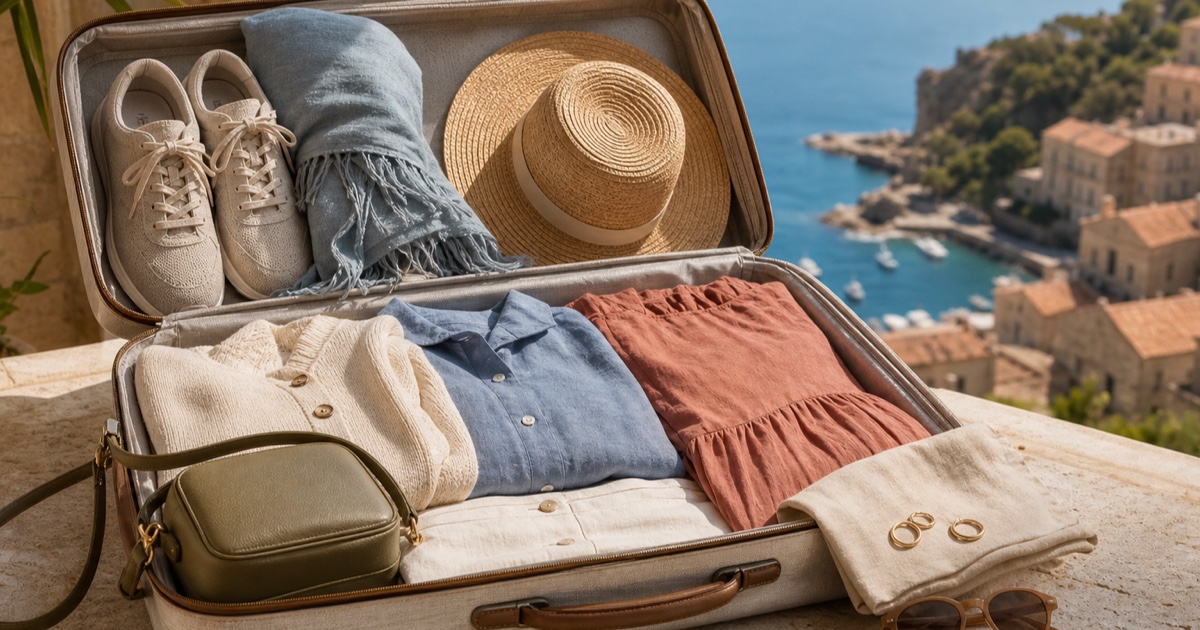
A Mediterranean cruise can make an ordinary suitcase feel surprisingly complicated. One port may involve a long transfer, sunlit ruins and uneven streets; another may include a tender, steep steps and a religious site with its own clothing expectations. Back on the ship, the same traveller may want to look composed for dinner without carrying an evening wardrobe that never works ashore.
The useful answer is a port-to-dinner capsule: breathable pieces that tolerate walking, light layers that adjust to shade and indoor cooling, modest coverage that can be added when required, and a small evening shift built from the same clothes. This guide gives each item a job, then shows how to repeat it without making every day look or feel the same.
Elite Fashion may earn a commission from qualifying purchases made through shopping links on this page. Links are selected for editorial fit and practical relevance; availability, materials and retailer terms can change.
Quick Answer
Build around two comfortable bottoms, one midi dress or equally versatile one-piece, four tops, one light cardigan, one compact weather layer, one modest cover-up, broken-in walking shoes, an optional low-volume dinner shoe, a sun hat and a secure crossbody bag. Keep the colours coordinated so the cardigan, scarf, shoes and bag work with every base outfit. Start with the hardest port day, then make dinner from a cleaner top, the dress, or the same trouser with a different proportion.
Start With the Port Days You Will Actually Do
The CruiseGuide Mediterranean Cruise Packing Guide recommends packing from real port conditions rather than copying a universal list. Its practical priorities are broken-in walking shoes, sun protection, lightweight layers, a modest cover-up for religious sites, a compact rain layer and a secure day bag. That order matters because a Western Mediterranean city circuit, a Greek Isles sailing and a shoulder-season Adriatic route can ask very different things from the same suitcase.
Write one line for each port: expected walking, ground surface, transfer time, shade, planned site, likely indoor time and any operator instructions. A museum-and-café day in Barcelona is not the same clothing problem as exposed archaeological ground, a tender arrival or a long inland transfer. Check the current weather close to departure, and verify entry expectations with each site or tour operator rather than assuming one coverage rule applies everywhere.
A 16-Piece Port-to-Dinner Capsule
The count below is a framework, not a requirement. Laundry access, trip length, personal comfort, season and the actual itinerary should change the quantity. Swimwear, sleepwear, undergarments and specialized excursion equipment sit outside this clothing count.
| Role | Suggested pieces | Decision test |
|---|---|---|
| Walking bottoms | Two breathable trousers, skirts or shorts | Can you sit through transfers, climb steps and pair each one with at least three tops? |
| Day tops | Four washable tops | Do the necklines and sleeves work alone, under the cardigan and with your site-coverage plan? |
| One-piece option | One midi dress or jumpsuit | Can it handle an easy port day and become dinner-ready with the same layer and shoe? |
| Light layer | One cardigan | Is it comfortable in an air-conditioned interior and compact enough for the day bag? |
| Weather layer | One light rain or wind layer | Does it fit over the cardigan without becoming too bulky to carry? |
| Coverage piece | One scarf or light overshirt | Does it provide useful coverage while still meeting the specific site's current requirements? |
| Walking shoe | One broken-in pair | Would you choose it for the longest confirmed day, not just the prettiest outfit? |
| Second shoe | Optional compact pair | Does it solve a real dinner, recovery or alternate-fit need? |
| Accessories | Hat, secure bag and two small accents | Do they improve comfort or change the outfit without duplicating a whole category? |
Choose a Palette That Survives Repetition
A small palette is what turns separate garments into a usable system. Start with two neutrals such as cream and navy, sand and olive, or black and warm white. Add one sunlit accent—terracotta, sea blue, saffron or coral—that appears in only two or three pieces. The accent creates visual change while the neutrals keep every top connected to every bottom.
Texture adds range without adding volume. A soft knit over a crisp cotton or linen-blend shirt feels different from the same knit over a fluid dress. A woven hat and matte crossbody bag can make the daytime outfit feel intentional, while small earrings or a scarf tied closer to the neck can shift the same base toward dinner. Read care labels and fabric content; a fibre name alone does not guarantee comfort, opacity or easy washing.
Build the Hardest Port Outfit First
Choose the longest, hottest or most physically demanding confirmed day and dress that one first. Start with the broken-in walking shoe. Add the bottom that stays comfortable while seated and moving, then a breathable top with enough coverage for the plan. Put the light layer, weather layer and any required site cover-up in the crossbody or day bag only if the bag carries them without straining the strap.
This reverse approach prevents a common packing error: creating beautiful ship outfits first, then filling the remaining space with untested port clothes. The hardest day determines the shoe and practical bag. Easier days can borrow those pieces, but the hardest day cannot borrow comfort from a decorative option that was never built for distance.
Compare the Six Working Pieces
These category links correspond to the main jobs in the capsule. Compare current materials, sizing, care guidance and retailer terms, and skip any category already covered by something dependable in your wardrobe.
Plan Religious-Site Coverage as Its Own Layer
Do not rely on a vague idea of “modest dress.” Requirements can vary by country, site, worship space, season and event. Some places may expect covered shoulders or knees; others may have different instructions, and admission practices can change. Check the official site or tour operator before departure and follow the current local guidance.
A scarf can be useful, but it is not automatically sufficient. A lightweight overshirt, sleeved midi dress or breathable trouser may be a more reliable part of the outfit. The best coverage piece is one you can put on respectfully before arrival, wear without overheating, and store without consuming the entire bag when it is no longer needed.
Make Walking Shoes the Style Anchor
Historic streets, steps and archaeological surfaces reward familiar footwear. Choose shoes by fit, grip, stability and the actual route; a product title cannot prove suitability. Try them with the socks you will pack, wear them on several ordinary walks, and notice heel movement, toe pressure and hot spots before travel. New shoes should not make their first long appearance on a port day.
Once the main shoe is chosen, repeat one of its colours elsewhere. Cream sneakers connect easily to a cream cardigan or woven hat; a darker walking shoe can echo the crossbody strap or trouser. This small visual link makes practical footwear look deliberate. A second pair earns space only when it changes function: a compact dinner flat, a recovery sandal for the ship, or an alternate walking fit if your feet benefit from rotation.

Move From Port to Dinner With One Controlled Change
The fastest transition is usually not a complete outfit change. Remove the hat, wash or cool down, change the most sun-exposed top, and replace the practical layer with the cardigan or a cleaner overshirt. A trouser worn with a breathable daytime tee can take a refined top at dinner. A midi dress used for an easy morning can return with the cardigan and a small accessory.
Check the cruise line's current dress guidance for the exact sailing, venue and event. “Smart casual,” theme nights and formal expectations are not identical across operators or ships. If one event matters to you, pack for that verified requirement. Otherwise, avoid carrying several speculative evening outfits that share no role with the rest of the trip.
Use Four Outfit Formulas Instead of Daily Costumes
| Scenario | Base formula | Adjustment |
|---|---|---|
| Long city transfer | Breathable top + easy trouser + walking shoe + crossbody | Carry the cardigan for the coach, train or museum. |
| Sunny island walk | Midi dress or light separates + hat + walking shoe | Add verified site coverage and keep the bag light. |
| Shoulder-season port | Top + trouser + cardigan + compact weather layer | Remove layers independently as conditions change. |
| Relaxed dinner | Midi dress or trouser + refined top + cardigan | Change one accessory or shoe rather than the whole outfit. |
Photograph each formula at home. The purpose is not to plan social pictures; it is to catch practical gaps. A top may become transparent in strong light, a bag strap may sit poorly over the cardigan, or the weather layer may not close over the knit. Fixing those interactions is more valuable than adding another attractive but isolated item.
Handle Heat, Sea Breeze and Cool Interiors Separately
One heavy layer cannot solve every temperature change. A breathable base helps during exposed walking. The cardigan manages indoor cooling and later hours. The compact weather layer handles wind or a passing shower when appropriate. Because each piece has a separate role, you can remove one without losing the entire system.
Seasonal patterns are not a forecast. Conditions vary by port and date, and coastal weather can change. Review a trustworthy forecast close to departure, then check excursion notes for shade, elevation, boat exposure and required equipment. If an operator supplies or requires specialized gear, follow that instruction instead of substituting a fashion layer.
Protect the First Hours in Your Carry-On
CruiseGuide also recommends keeping documents, essential medication, valuables, chargers and a change of clothes in the bag that stays with you until the cabin is available. For this capsule, add the walking shoe only if you are not already wearing it, plus one clean top and the light layer. That combination can cover a delayed checked bag more effectively than a second dinner look.
Check airline and cruise-line luggage rules directly because limits and prohibited items vary. Do not assume a familiar appliance or garment-care device is allowed. Wrinkle-resistant fabrics, careful folding and the ship's current approved laundry or pressing services are safer planning tools than an unverified device.
Pack for Rewearing, Laundry and a Small Cabin
Test the capsule by laying out six or seven outfits, then removing duplicates. If one top only works with one bottom, ask whether that single combination is important enough to justify the space. If every outfit needs a different bra, shoe or bag, the capsule has hidden complexity. The strongest pieces fit the same underlayers, work with the same footwear and tolerate the same care plan.
Review the ship's current laundry options and your comfort with hand washing before reducing quantities. Quick-drying claims should be checked against the actual fabric and care label. Cabin storage and drying space can be limited, so carry only the washing plan you will realistically use rather than a theoretical minimalist plan.
Shop the Port-to-Dinner Capsule
Use this focused edit after checking your own wardrobe. Each category should fill a specific gap in walking comfort, coverage, layering or the dinner transition.
A Final Decision Path Before You Close the Case
- Confirm the itinerary, transfers, planned sites and excursion instructions.
- Choose the hardest port shoe and wear it before travel.
- Build four port formulas and two dinner variations from the same core pieces.
- Verify current site coverage rules, ship dress guidance, weather and prohibited items.
- Put documents, medication and first-hours essentials in the carry-on.
- Remove the item that has no confirmed job or only works with one speculative outfit.
For port timing, route decisions and current-source handoffs, continue with CruiseGuide by Horizon Outdoor. Elite Fashion helps the pieces work together; CruiseGuide helps clarify the port conditions and travel decisions those pieces need to support.
FAQ
How many outfits should I pack for a seven-night Mediterranean cruise?
Plan repeatable formulas rather than seven unrelated outfits. Two bottoms, four tops, one versatile dress, two light layers and one or two shoe roles can create enough variation for many travellers, but adjust for laundry access, personal needs and the itinerary.
Can I wear sneakers to dinner on a Mediterranean cruise?
That depends on the ship, venue and event. Check the cruise line's current guidance for your sailing. Clean, understated walking shoes may suit some relaxed settings, while a compact second shoe may be useful when the verified dress expectation is different.
What should I wear to churches or religious sites in Mediterranean ports?
Requirements vary. Check the official site or tour operator for current shoulder, knee, head or footwear guidance. Carry a suitable layer when required, but do not assume a scarf alone meets every site's expectations.
Do I need a rain jacket for a Mediterranean cruise?
A compact weather layer can be useful, especially outside peak summer, but conditions vary by date and port. Check a current forecast and the exposure expected on your excursions before deciding what level of protection to bring.
How do I keep a cruise capsule from looking repetitive?
Use a coordinated palette, then vary proportion and texture. Wear the cardigan open or buttoned, change the scarf placement, switch between the dress and separates, and repeat one accent colour in small details rather than packing extra categories.
Browse Broader Categories
Use these broader entrances only after the capsule jobs and itinerary needs are clear.