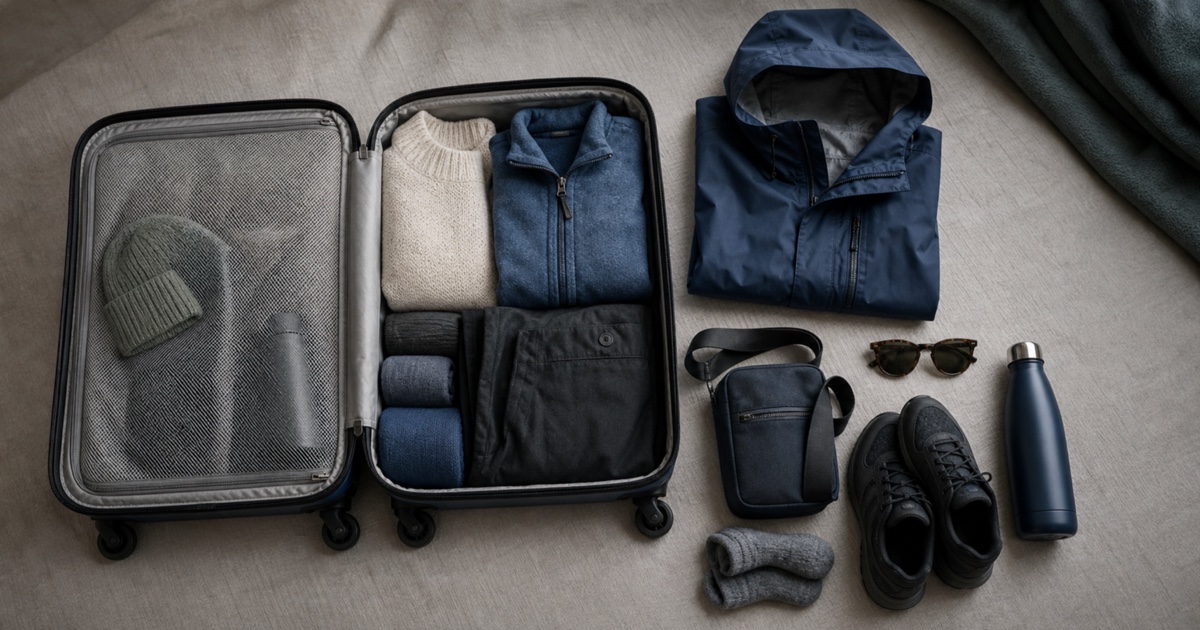
An Alaska cruise wardrobe has to handle several climates in one suitcase. The day may begin on a cold open deck, continue through drizzle at a forested port, warm up during a long walk, and finish inside a dining room where the air feels entirely different. Packing one bulky outfit for every possibility is the fastest route to a crowded cabin and a suitcase full of pieces that never meet daylight.
The calmer answer is a capsule built around removable layers, repeatable colours, useful shoes and one compact day bag. This guide focuses on what clothes need to do, how they work together, and which details are worth checking before departure. It does not assume one sailing, month or body experiences Alaska weather in the same way.
Elite Fashion may earn a commission from qualifying purchases made through shopping links on this page. Links are selected for editorial fit and practical relevance; availability, materials and retailer terms can change.
Quick Answer
Start with three wearable layers: a comfortable base, a light insulating mid-layer and a rain-resistant outer shell. Add two easy trousers, one relaxed onboard bottom, three or four tops, a compact knit, walking shoes, optional dressier shoes, warm socks, a hat and a hands-free bag. Keep the palette narrow enough that almost every top works with every bottom. The goal is not to look identical all week; it is to let small changes in texture, proportion and accessories do more work than extra clothing.
Let the Itinerary Set the Wardrobe
Before choosing clothes, read the route. A Vancouver round trip, a Seattle sailing and a one-way Gulf itinerary can create different embarkation plans, scenic sailing periods and port combinations. Port days also vary: a town walk, railway excursion, small-boat outing and glacier viewpoint do not ask the same things from footwear or outerwear.
For the practical weather and gear layer, use the independent CruiseGuide Alaska Cruise Packing Guide. Its useful principle is to build a three-layer system and treat rain protection as a complete setup rather than relying on one dramatic coat. Use that planning information beside the forecast, your excursion details and the current guidance from your cruise line.
A 15-Piece Alaska Cruise Capsule
This is a decision framework, not a universal packing quota. Count items that serve the same role together, and adapt the number to trip length, laundry access, personal temperature comfort and planned activities.
| Capsule role | Suggested pieces | Why it earns space |
|---|---|---|
| Base layers | Two long-sleeve layers | Wear alone indoors or under fleece and shell on colder deck periods. |
| Everyday tops | Three short- or long-sleeve tops | Give the capsule visual change while repeating the same outer layers. |
| Mid-layers | One fleece and one compact knit | Separate active port comfort from a slightly more polished onboard texture. |
| Outer layer | One hooded rain shell | Handles wind and rain exposure while leaving insulation adjustable underneath. |
| Bottoms | Two walking trousers and one relaxed onboard bottom | Cover wet port days, longer walks and quieter cabin or sea-day hours. |
| Dinner option | One knit dress or smart separates | Creates an evening change without a separate formal wardrobe. |
| Shoes | One dependable walking pair; optional second pair | Foot comfort matters more than multiplying outfit choices. |
| Small warmth | Warm socks and a compact beanie | Add warmth quickly without taking the space of another coat. |
| Port carry | One secure crossbody or small daypack | Keeps essentials controlled while leaving hands free. |
Build the Three-Layer System Properly
1. The base should work indoors too
A base layer is most useful when it still looks intentional after the fleece comes off. Choose a neckline and colour you are happy to wear on their own. Merino, synthetic and blended fabrics behave differently, so read fibre content and care instructions rather than treating one label as a performance guarantee. If sensitive skin dislikes a fabric, a technically impressive layer will simply stay in the suitcase.
2. The mid-layer should be easy to remove
A zip fleece is practical for fast temperature changes, while a compact knit gives the capsule a quieter dinner or lounge option. They do not need to be equally warm. The better pairing is one active layer and one refined layer that can both sit under the same shell. Check shoulder room and sleeve bulk before departure; three good layers can still fail if they bind when worn together.
3. The shell protects the system
Judge a shell by hood adjustment, length, cuff closure, pocket placement and room for the layers underneath. A very heavy insulated jacket may be comfortable on one cold morning and frustrating during a steep port walk. A shell lets the wearer change insulation without changing weather protection. No article can promise waterproofness or warmth for a specific product, so confirm the current product description, intended use and care guidance.
Compare the Working Layers
Use these as category-level comparison points. Fit, materials and current retailer information matter more than the search label.
Dress for Rain Without Looking Like One Continuous Storm
A narrow palette keeps wet-weather pieces from dominating every photo and outfit. Navy, charcoal, soft grey, forest green, cream and muted blue are easy to repeat and sit naturally against Alaska scenery. One warmer accent—a rust scarf, berry knit or ochre cap—can make the capsule feel considered without requiring a second outerwear story.
Practical details change how polished the outfit feels. Straight or gently tapered trousers sit more cleanly over walking shoes than fabric that drags on wet ground. A sweater hem that stays inside the shell avoids a damp band around the hips. A compact hat that fits beneath the hood works better than competing with it. These are small adjustments, but they matter when the same pieces appear for several days.
Port Days Need Movement, Not Costume
For Juneau, Skagway, Ketchikan or another port, begin with the confirmed activity. A town-and-museum day may work with regular walking shoes and a lighter bag. A rail trip asks for sitting comfort and a layer that is easy to remove. A boat excursion can feel colder and more exposed. A longer outdoor outing may have operator-specific footwear or gear guidance. Read that guidance before shopping.
The port outfit formula is simple: base layer, walking trouser, fleece, shell, warm sock, secure shoe and small hands-free bag. Place a beanie or light glove in the bag instead of wearing every layer at the gangway. Keep medication, documents and time-sensitive essentials with you. CruiseGuide's broader Alaska shore-excursion planning guide is a useful companion when deciding how much walking, transfer time and weather exposure the day may contain.

Separate Open-Deck Clothes From Indoor Ship Style
Open decks can feel windy, damp and colder than the protected areas of the ship. Indoor lounges, corridors and dining spaces are controlled environments, so the shell and fleece may quickly become too much. Pack tops and mid-layers that still look complete when the outer system comes off. A fine knit over a base, or a clean long-sleeve top with dark trousers, moves from observation lounge to lunch without an outfit change.
For dinner, check the cruise line's current dress guidance instead of relying on a general idea of “formal night.” A compact knit dress, dark trouser with a refined top, or a collared layer can cover many relaxed evenings without occupying much space. If a specific event matters to you, pack for that visible requirement rather than carrying several speculative outfits.
Choose Shoes by the Hardest Real Day
Shoes consume luggage space and can decide whether a port day feels easy or endless. Choose the main pair for the wettest or longest activity you are actually likely to do. Check fit with the socks you plan to pack, walk in them before travel, and review sole, care and water-resistance information without assuming a product name proves performance.
A second shoe should solve a different problem. It might be a compact slip-on for the ship, a simple dinner shoe, or a backup walking pair if the itinerary makes wet footwear likely. If the second pair does not change comfort, recovery or a required dress moment, it probably does not earn the volume.
Use Colour and Repetition Intentionally
Photographs make travellers worry that repeated clothing will look dull. In practice, proportion changes more than people expect. Wear the fleece open over a light base one day, zipped beneath the shell the next, and replace it with the knit indoors. Change the beanie, scarf or bag placement. Roll the trouser hem only when the surface is dry. A capsule looks deliberate when the pieces share a palette and each combination suits the scene.
Do not make every item dark simply because rain is possible. A cream knit, pale blue base or soft grey fleece lifts the capsule and remains easy to combine. Place lighter pieces under the shell on messy days, and use them on the ship when weather exposure is low. This gives the suitcase visual range without multiplying categories.
Pack in Outfits, Then Break Them Apart
Lay out one outfit for embarkation, one for the coldest port plan, one for an ordinary town day, one for scenic deck time and one for dinner. Then look for repeated pieces. If five outfits use five different trousers, the capsule is not doing enough work. If one shell, one fleece and two bottoms cover most situations, the structure is sound.
Keep the embarkation outfit useful after day one. A comfortable trouser, base top, knit or fleece and shell can become a later port outfit. Put medication, documents, a clean base layer and any first-hours essentials in the carry-on because checked luggage may not reach the cabin immediately. A small packing cube can separate that first-day change from the rest of the bag.
Plan Laundry and Drying Before Adding Clothes
Cabins have limited hanging space, and a damp shell or sock needs a realistic place to dry. Check the ship's current laundry options and restrictions before assuming you can wash everything whenever you like. Quick-drying pieces can reduce quantity, but only if you are comfortable repeating them and the care label supports the method available.
Avoid packing prohibited heating devices as garment-care shortcuts. Cruise line policies vary and can change. Use wrinkle-resistant fabrics, careful rolling, a garment folder or the ship's approved laundry and pressing services where available. Verify current rules directly with the operator before sailing.
Shop the Practical Capsule
These five categories map to the main jobs in the wardrobe. Compare specifications and retailer terms, and skip any category already covered well by something you own.
A Calm Final Packing Check
Wear every planned layer together once. Sit, reach and walk in the combination. Check that the shell closes over the fleece, the trouser works with the shoe, the bag strap sits over the outer layer and the hat fits with the hood. Then remove the item that only works in one imagined photograph.
Recheck the sailing forecast, excursion instructions and operator rules close to departure. For route planning, port logistics and printable checklists, CruiseGuide by Horizon Outdoor is the natural next resource. Elite Fashion's role is the wearable system; CruiseGuide is better placed to help with the route and port decisions that shape it.
FAQ
How many layers do I need for an Alaska cruise?
Plan around three wearable levels: a base, an insulating mid-layer and a weather-facing shell. Bring enough base tops to rotate, but avoid duplicating heavy outerwear unless the itinerary creates a clear need.
Do I need a winter coat for an Alaska cruise?
It depends on the month, itinerary, personal cold tolerance and planned activities. Many travellers prefer adjustable layers under a shell, but you should check the forecast and excursion guidance for your sailing.
What shoes should I wear in Alaska cruise ports?
Choose a comfortable walking pair that suits the surface and activity you have booked. Confirm fit with your planned socks and check current product and operator guidance rather than assuming every port requires a hiking boot.
What should I wear to dinner on an Alaska cruise?
Check the cruise line's current dress guidance. A compact knit dress or smart separates often provides a useful change from port clothes without requiring a large evening wardrobe.
Browse Broader Categories
Use these wider category entrances only after the capsule roles are clear.