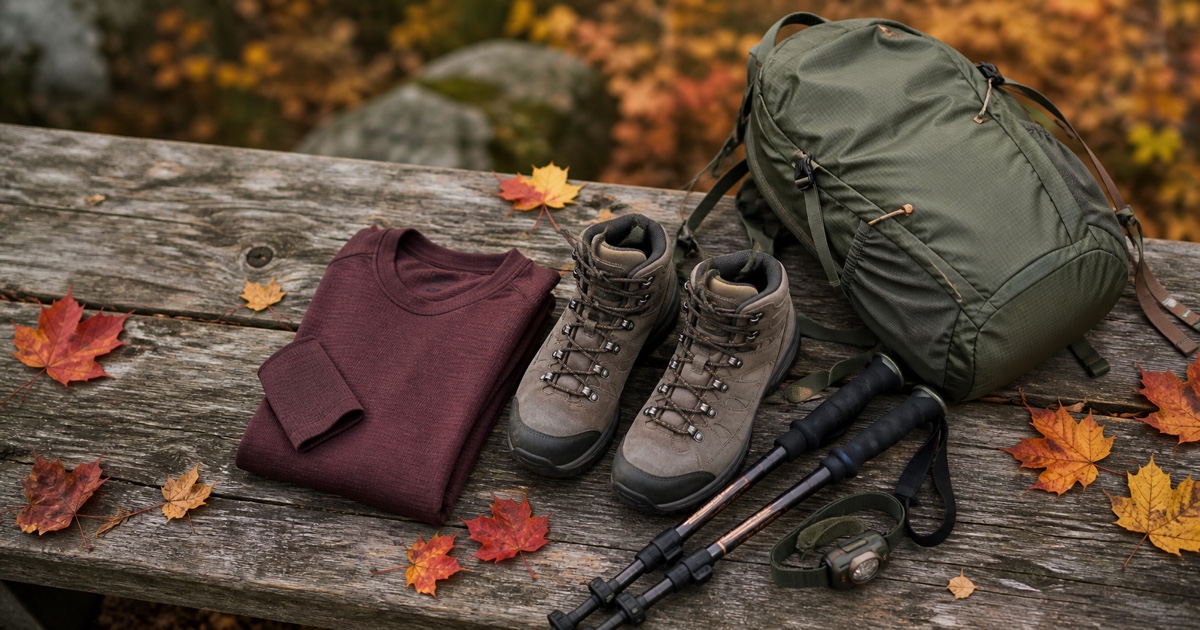
Fall foliage day hikes look simple because the destination is usually close, the route is marked, and the calendar promises a few hours outside rather than a major expedition. The practical problem is that shoulder-season days can change quickly. A sunny parking lot can become a shaded trail, a dry start can lead to damp leaves underfoot, and an afternoon photo stop can make the return feel later than expected.
A useful packing list respects that uncertainty without becoming dramatic. The backpack should hold the day's layers and small essentials. Footwear should suit the route and the reader's fit needs. A merino base layer can help build a simple clothing system when checked against the forecast and existing outer layers. Hiking poles and a headlamp are optional for some walks, but worth comparing when the route includes uneven grades, early starts, late returns, or limited daylight.
This article does not make navigation, rescue, traction, visibility, warmth, or injury-prevention promises. Readers should check the route, park notices, forecast, daylight window, trail conditions, and their own comfort level before leaving. The goal is a calmer comparison of packing roles, not a guarantee that any item makes a trail safe.
Quick Answer
Pack for the full day rather than the first hour. Start with a hiking backpack that can hold water, snacks, an extra layer, a phone, keys, a small first-aid pouch, and any route-specific basics required by the park. Choose hiking boots only after checking fit, socks, trail surface, and return policy. Use a merino base layer as part of a layer system, not as a standalone answer to weather.
Hiking poles make sense when the reader wants extra rhythm on rolling ground, has a route where poles are permitted, and is willing to carry them when not in use. A headlamp is a small pack item that can be useful when a foliage stop, late lunch, or slower return compresses daylight, but it should never replace route planning or a firm turnaround time.
Shop the Edit
Elite Fashion may earn a commission from qualifying purchases made through shopping links on this page. Links are chosen for editorial fit and practical relevance to the article topic.
Plan Around the Shortest Daylight Window
The best fall hiking decision often happens before any shopping link is opened. Look at sunrise, sunset, drive time, trail length, elevation, weather, and the time needed for photos or lunch. A route that feels casual in July can feel rushed in October if the group starts late or pauses often under the trees.
Use that timing to decide what the pack must carry. A short loop near town may need a simple bag, water, snacks, a light layer, phone, and keys. A longer marked trail may ask for more careful layering, a charged light, and a better plan for wet leaves or cooler shaded sections. If the schedule is uncertain, choose a shorter route instead of compensating with more gear.
Choose a Backpack That Stays Organized When Light
A fall foliage pack does not need to be large, but it should keep the day from becoming messy. Compare overall volume, shoulder-strap shape, hip or sternum strap if listed, bottle-pocket access, front-pocket logic, zipper openings, and whether a folded layer can be added without crushing snacks or small items. A lightly packed bag that collapses into a lump is harder to use than a modest one with clear pockets.
Think through the opening moments: reaching for a phone at the viewpoint, adding a hat or gloves, pulling out a snack, storing a damp layer, and finding car keys at the end. If the bag supports those handoffs, it is doing the job. If every item disappears into one main compartment, the reader may spend more time reorganizing than enjoying the route.
Compare Boots by Fit and Trail Surface
Women's hiking boots vary widely in shape, ankle height, lacing, toe box, sole profile, and weight. Compare those details against the actual trail rather than assuming a taller boot is automatically better. Some readers may prefer a low trail shoe for a packed gravel path; others may want more structure for roots, wet leaves, or uneven ground. The product page can help with materials and sizing notes, but fit remains personal.
Avoid relying on a listing for traction, waterproofing, or comfort promises. Surface conditions, socks, pace, previous wear, and foot shape all matter. Before a foliage outing, boots should be tried with the socks intended for the hike and worn around enough to notice rubbing, heel lift, or pressure points. A return policy is part of the comparison because sizing mistakes are common.
Use a Base Layer as One Part of the Clothing Plan
A merino wool base layer can be useful when the morning starts cool and the route has shaded pauses, but it should be chosen as part of a full outfit. Compare fabric weight, neckline, sleeve length, fit under a fleece or rain shell, care instructions, and whether it can be worn again beyond one hike. A base layer that only works for a single scenic outing is less useful than one that also fits travel, cabins, or cool commute layers.
Layering is a sequence: base, mid-layer, outer layer if needed, then small accessories depending on forecast and personal comfort. The base layer should not be asked to solve wind, rain, or every temperature swing. It simply gives the reader a cleaner starting point for a day that may move from cool morning to warmer climb to shaded return.
Decide Whether Hiking Poles Belong on This Route
Hiking poles are not mandatory for a foliage walk, but they can be worth comparing for rolling paths, repeated descents, or readers who like a steady walking rhythm. Compare grip shape, folded length, locking mechanism, tip options, wrist strap, pack attachment, and how easy they are to collapse when the route becomes crowded or smooth.
The first check is whether poles are appropriate and permitted on the planned path. Boardwalks, delicate terrain, crowded viewpoints, and some park rules can change the answer. Poles also require attention; carrying them without knowing how to adjust length or store them can add clutter. Buy them for a clear route role, not because they make a short hike look more serious.
Keep a Headlamp in the Small Essentials Pouch
A headlamp is easy to overlook on a day hike because the plan is to finish before dark. Fall outings are exactly when that assumption needs review. Compare weight, strap adjustability, battery type, beam modes, storage pouch, and whether the light can live in the pack without being borrowed for household tasks and forgotten.
A light does not replace daylight planning. It is a backup for a slow return, a shaded parking area, or a delayed finish, not permission to start late. Readers should still set a turnaround time, keep the phone charged, and check park guidance. The headlamp simply gives the small essentials kit a more complete fall shape.
Build a Compact Packing Formula
For a casual marked loop, use a small hiking backpack, comfortable route-appropriate footwear, a breathable base, water, snacks, phone, keys, and a light layer. For a longer foliage route, add a headlamp, more deliberate layering, and poles only if the terrain and park rules suit them. For a photo-heavy afternoon, make the pack easier to open so gloves, light, and snacks do not require unpacking everything.
After the hike, review what was actually used. If the backpack was awkward, the next purchase may be organization rather than more capacity. If the boots rubbed, fix fit before planning another route. If the base layer never came out because the day was warm, keep it for cooler mornings rather than forcing it into every outing.
Comparison Points
| Piece | What to compare |
|---|---|
| Hiking backpack | Compare volume, strap shape, pocket access, bottle placement, zipper openings, and how it behaves with a light load. |
| Women's hiking boots | Compare fit notes, ankle height, lacing, toe space, sole profile, care guidance, and exchange options. |
| Merino base layer | Compare fabric notes, sleeve length, neckline, care instructions, and how it layers under pieces already owned. |
| Hiking poles | Compare folded length, locking style, grips, tips, pack attachment, and whether poles suit the planned route. |
| Headlamp | Compare weight, strap adjustment, battery type, beam settings, storage, and whether it stays in the pack. |
Use Cases
Marked park loop
Keep the kit simple: small pack, route-appropriate footwear, water, snacks, phone, and one extra layer.
Cool shaded trail
Use the base layer as the starting point, then add or remove mid-layers as the day changes.
Late-afternoon foliage stop
Carry a headlamp and set a firm turnaround time instead of assuming the return will stay bright.
Before You Buy
For What to Pack for a Fall Foliage Day Hike, use retailer pages to confirm sizing, dimensions, materials, care instructions, color options, delivery timing, and return terms. The best choice is the one that fits the real routine and the real storage space, not the one that looks most complete in isolation.
After the first week of using the What to Pack for a Fall Foliage Day Hike setup, notice what was reached for, what stayed unused, and what made cleanup or storage harder. That small review is often more useful than adding another product before the routine has proved itself.
Browse Category Hubs
For What to Pack for a Fall Foliage Day Hike, use these broader category hubs after the article-specific product options. Narrow by size, material, format, care needs, delivery options, and the space available at home or work.
FAQ
What should I pack for a fall foliage day hike?
Start with a small backpack, water, snacks, a charged phone, weather-appropriate layers, footwear that suits the route, and any park-recommended basics.
Do I need hiking boots for a short foliage walk?
Not always; compare the route surface, weather, fit, socks, and return policy before deciding between boots, trail shoes, or other suitable footwear.
Should I bring a headlamp on a day hike?
It is a compact backup for fall outings with early sunsets or slower returns, but readers should still plan daylight and route timing carefully.