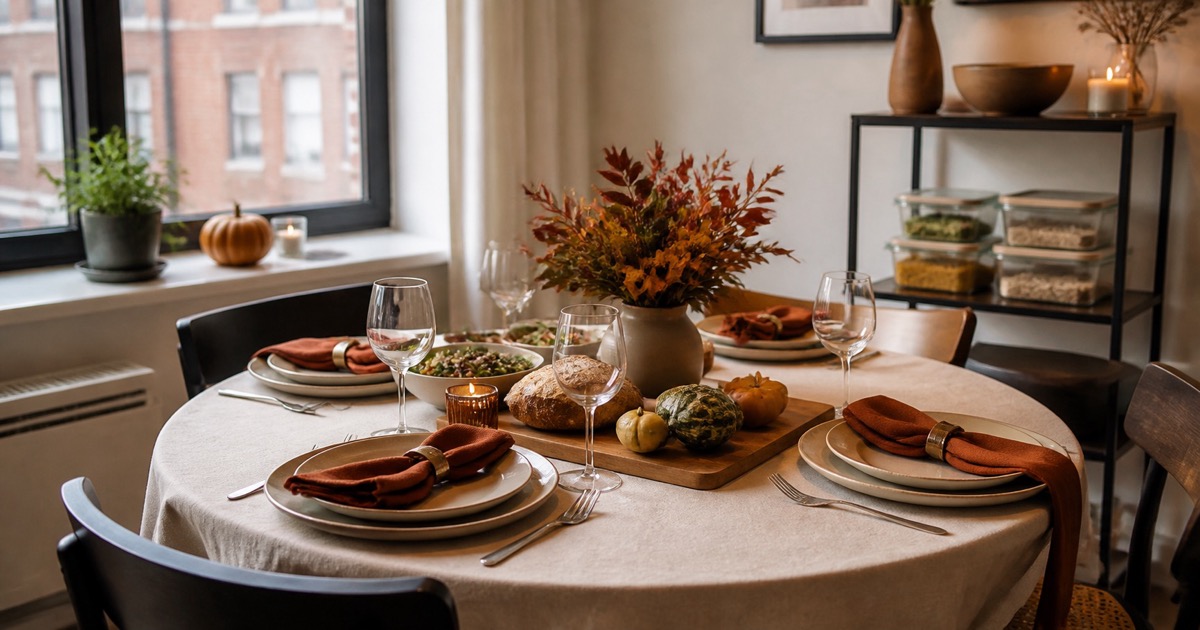
A small dining space changes the meaning of a Thanksgiving table. The problem is not only making dinner feel seasonal. The table may also be the prep surface, serving zone, conversation space, and cleanup staging area. If the setting is too elaborate, guests lose elbow room. If it is too casual, the meal may feel unfinished even when the food is thoughtful.
A useful edit starts with pieces that do more than decorate one holiday. A tablecloth can soften a compact table and hide visual clutter. Cloth napkins bring color and texture without needing a large centerpiece. Wine glasses can make the setting feel intentional if they fit the cabinet afterward. A cutting board can serve bread, cheese, or vegetables before returning to everyday prep. Glass storage supports the after-dinner reset when leftovers need a clear path.
This guide does not make food-safety, stain-resistance, break-resistance, material, or hosting-outcome claims. Readers should confirm product dimensions, care guidance, materials, temperature guidance where relevant, delivery details, and return terms on retailer pages. The goal is a flexible small-space hosting plan that stores cleanly and remains useful after the holiday.
Quick Answer
For a small Thanksgiving table, choose one visual base, one repeatable place-setting detail, one glassware decision, one board that can move between serving and prep, and one storage set for the end of the meal. That means tablecloth, cloth napkins, wine glasses, cutting board, and glass storage can cover more ground than a larger collection of seasonal decor.
Keep the centerpiece low, leave serving room, and plan cleanup before guests arrive. If the table is small, a folded cloth napkin and a warm-toned tablecloth may do more than tall arrangements or extra dishes. The best pieces should work again for Sunday dinner, winter brunch, apartment hosting, and weeknight leftovers.
Shop the Edit
Elite Fashion may earn a commission from qualifying purchases made through shopping links on this page. Links are chosen for editorial fit and practical relevance to the article topic.
Measure the Table Before Choosing the Mood
A compact dining table needs measurements before styling. Check tabletop length, width, extension leaves, chair clearance, and how much room remains once plates, glasses, cutlery, and serving pieces are placed. A tablecloth that looks elegant online can overwhelm a small round table if the drop is too long or the fabric bunches under guests' knees.
Use the measurement to choose the mood. A fitted or modest-drop tablecloth creates calm when the table doubles as a work surface during the week. A warmer color or subtle texture can carry the fall feeling without demanding extra tabletop space. If the table is already visually strong, a runner or placemat may be enough, but this article keeps the tablecloth as the main comparison because it changes the entire room quickly.
Use Cloth Napkins for Color Without Clutter
Cloth napkins are one of the most useful small-space hosting details because they bring color, texture, and a sense of occasion without taking up serving space. Compare fabric notes, count, size, laundering guidance, fold behavior, color, and whether the set can work after Thanksgiving. Rust, olive, cream, charcoal, and muted plaid can feel seasonal without becoming single-use.
The storage test matters. If the napkins need special folding, ironing, or a dedicated box the household will not maintain, they may not earn their place. A simple stack in a linen drawer or basket can make them repeat for weeknight dinners and casual brunches. The table feels more polished because the detail is used often, not because it waits all year.
Choose Wine Glasses That Fit the Cabinet
Wine glasses can make a compact table feel more complete, but they also create storage pressure. Compare height, bowl shape, stem versus stemless format, set count, cabinet clearance, care guidance, and whether the glasses suit the drinks actually served. A smaller, versatile set may be more useful than a formal set that crowds the table and cabinet.
Avoid treating glassware as an outcome promise. The right glass does not guarantee a better evening; it simply helps the table feel intentional and gives guests a comfortable place for the drink being served. In a small dining area, the best choice is often the set that looks refined, fits the cabinet, and leaves room for water glasses, serving dishes, and elbows.
Let a Cutting Board Double as a Serving Piece
A cutting board set can help a small Thanksgiving meal because one board can move from prep to serving bread, cheese, vegetables, or dessert bites when the material and care instructions allow. Compare board dimensions, thickness, handle shape, edge detail, care guidance, and where each board will store. A board that is too large for the sink or shelf will not feel convenient after dinner.
Use boards to reduce extra platters, not to make the table look crowded. A long board down the center may serve appetizers before the main meal, then move away when plates need space. A smaller board can hold bread beside the table or support carving and prep in the kitchen. The useful piece is the one that moves through the evening without needing three replacements.
Plan Leftovers Before the First Plate Is Served
Glass storage belongs in the Thanksgiving table edit because the meal is not finished when guests stand up. Compare container sizes, lid notes, stackability, care guidance, refrigerator footprint, and how the set stores between gatherings. A few right-sized containers can make the after-dinner handoff calmer than searching for mismatched lids while the table is still full.
This is not a food-safety promise. Readers should follow food-storage guidance, product labels, and local recommendations for handling leftovers. The editorial point is workflow: know where containers are, clear one surface for filling them, and avoid keeping the table blocked by dishes that have nowhere to go.
Build a Table That Can Reset Fast
A small space benefits from a reset sequence. Before guests arrive, decide where coats go, where serving dishes wait, where empty glasses land, and where containers will be filled. Keep the tablecloth simple enough to shake out or launder according to guidance, fold napkins into a shape guests can actually use, and keep the board arrangement low enough for conversation.
After dinner, remove tall or decorative items first, then serving boards, then glassware, then plates and linens. If the plan requires moving every object three times, the table is doing too much. The best small-space table looks warm at the start and becomes easy to clear at the end.
Keep the Pieces Useful After Thanksgiving
The strongest purchase test is whether each piece works again. The tablecloth should suit a winter dinner or spring brunch. Cloth napkins should reappear for ordinary meals. Wine glasses should fit the drinks guests actually accept. Cutting boards should support everyday prep or weekend snacks. Glass storage should serve weeknight cooking and fridge organization after the holiday.
Buying for repeat use keeps the table from becoming a storage problem. Small homes do not have much room for objects that are only allowed to appear once a year. A refined Thanksgiving table is not the one with the most items; it is the one where every piece has a second life.
Comparison Points
| Piece | What to compare |
|---|---|
| Tablecloth | Compare table dimensions, drop length, laundering guidance, color, texture, fold storage, and repeat use. |
| Cloth napkins | Compare fabric notes, count, size, washing instructions, folding behavior, color, and storage fit. |
| Wine glasses | Compare height, bowl shape, stem format, cabinet clearance, care guidance, and versatility for drinks served. |
| Cutting board set | Compare board dimensions, handle shape, surface use, care instructions, storage direction, and everyday roles. |
| Glass storage | Compare container sizes, lid notes, stackability, care guidance, fridge footprint, and storage between gatherings. |
Use Cases
Apartment Thanksgiving dinner
Use a modest tablecloth, cloth napkins, low board service, and a glassware set that leaves elbow room.
Friendsgiving buffet corner
Keep the board and glasses near the serving zone, then clear containers before dessert so leftovers have a path.
Post-holiday reuse
Let the same linens, glasses, board, and containers return for brunch, weeknight meals, and winter hosting.
Before You Buy
For The Thanksgiving Table Edit for a Small Dining Space, use retailer pages to confirm sizing, dimensions, materials, care instructions, color options, delivery timing, and return terms. The best choice is the one that fits the real routine and the real storage space, not the one that looks most complete in isolation.
After the first week of using the The Thanksgiving Table Edit for a Small Dining Space setup, notice what was reached for, what stayed unused, and what made cleanup or storage harder. That small review is often more useful than adding another product before the routine has proved itself.
Browse Category Hubs
For The Thanksgiving Table Edit for a Small Dining Space, use these broader category hubs after the article-specific product options. Narrow by size, material, format, care needs, delivery options, and the space available at home or work.
FAQ
How do I set a Thanksgiving table in a small dining space?
Start with a measured tablecloth, cloth napkins for color, compact glassware, one useful serving board, and a clear leftover-storage plan.
What should I avoid on a small Thanksgiving table?
Avoid tall centerpieces, oversized platters, too many glasses, and linens that are difficult to clear or store after dinner.
Are cloth napkins worth it for apartment hosting?
They can be useful when the set is easy to wash, stores compactly, and works for ordinary meals beyond one holiday.