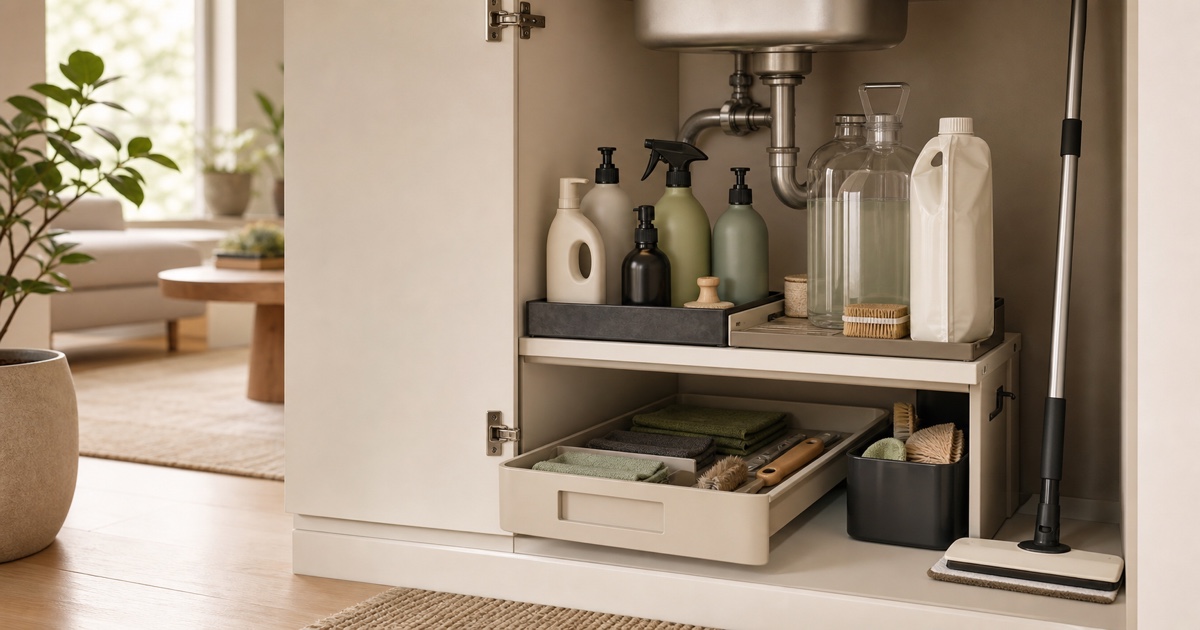
A small apartment does not have room for a dramatic cleaning closet that behaves like a stockroom. The better version is quieter: one readable refill station that holds floor care, surface routines, a small tool kit, and the containers that stop the whole area from sliding into clutter.
The point is not to buy more. It is to see which supplies deserve an easy reach, which backups should move elsewhere, and which products need careful label reading before they are used near food prep, textiles, painted surfaces, pets, or open windows. A cleaning station works when the next reset takes less decision-making, not when the cabinet looks full.
Elite Fashion may earn a commission from qualifying purchases made through shopping links on this page. Links are chosen for editorial fit and practical relevance to the article topic.
Quick Answer
Build the station around four zones: surface bottles, floor tools, small repairs, and loose pieces. Keep active items at the front, separate liquid bottles from dry extras, store basic tools in a tray, and use retailer pages to confirm label directions, dimensions, refill format, and current return details before buying.
Start With the Cabinet You Actually Have
Under-sink storage asks for humility. Pipes interrupt the shelf, the back corner is hard to see, and any leak or damp patch can turn a neat arrangement into a problem. Measure the vertical space before adding bottles, and check whether a tray can slide out without hitting plumbing. If the shelf is too tight, let the cabinet hold only daily pieces and move refills to a linen closet, entry cabinet, or utility bin.
The second check is hand movement. If the item is used after dinner, after a muddy entryway, or before guests arrive, it should be visible without moving three other things. If it is used once a season, it does not need front-row status. This simple hierarchy keeps the station from becoming a collection of good intentions.
The Six-Part Refill Station
| Piece | Best job | What to check before buying |
|---|---|---|
| Clorox Bleach | Occasional label-led cleaning support | Bottle size, cap style, storage warnings, ventilation directions, and whether the material you plan to clean is listed. |
| Lysol Disinfectant Spray | Quick surface routine when appropriate | Label directions, surface compatibility, scent tolerance, room airflow, and whether the spray can stand upright. |
| Swiffer Sweeper | Light dry floor maintenance | Handle storage, refill availability, pad format, and whether it reaches the tight areas that actually gather dust. |
| Swiffer WetJet | Wet floor resets in compact rooms | Pad storage, solution bottle storage, flooring guidance, and the space needed to keep refills dry. |
| Screwdriver Set | Small cabinet, hook, hinge, and furniture fixes | Case size, bit variety, grip, and whether it can live near the utility drawer without becoming loose hardware. |
| Cutlery Tray | Organizer for small tools, caps, brushes, and cloths | Drawer or shelf width, compartment depth, wipe-clean material, and whether it fits beside bottles. |
Shop the Edit
Use these options as a focused comparison point, then confirm size, labels, material guidance, and current retailer details before deciding what belongs in your station.
Put Liquids in the Most Stable Zone
Bottles deserve the least glamorous but most stable part of the setup. They should stand upright, remain readable, and avoid crowding paper goods, spare cloths, or small tools. If a bottle has strong label directions or ventilation reminders, do not decant it into an anonymous container. The original information matters, and the product should be stored in a way that keeps that information close.
For a small apartment, the safest habit is to buy for the next few weeks rather than the next year. Oversized backups can look efficient in a cart and become awkward at home. If the bottle blocks the pipe, presses against the cabinet door, or forces dry items onto the floor, it is too large for the station. Compare the space first, then the brand or format.
Give Floor Care a Return Route
A floor tool is only useful if it returns to the same place after a quick reset. The dry sweeper and wet-mop pieces should not lean across the cabinet opening, trap the door, or shed refills into the back corner. A wall clip, narrow side gap, or nearby utility hook can be better than forcing every floor-care piece under the sink.
The right comparison is not whether one tool can do everything. It is whether each tool solves a separate moment without creating new storage work. Dry floor dust, damp kitchen marks, and entryway grit are different jobs. A compact home can still separate them clearly, especially when refills are kept in a visible stack or tray.
Why a Small Tool Set Belongs Here
Apartment maintenance often arrives as tiny friction: a loose cabinet pull, a wobbling shelf, a hook that needs tightening, a drawer slide that catches. A screwdriver set earns its place when it prevents these small problems from turning into postponed chores. Keep it contained, keep it obvious, and avoid mixing sharp bits with cloths or cleaning caps.
A cutlery tray is useful because it borrows order from the kitchen and applies it to the utility zone. One section can hold spare cloths. Another can hold small brushes or caps. Another can hold bits and small repair pieces. The goal is not to make the under-sink area precious. It is to make the second and third use easier than the first.
A Low-Clutter Buying Sequence
Empty the cabinet first and remove anything expired, damaged, mystery-labeled, or unrelated to sink, floor, or small utility work. Wipe the shelf, check for damp areas, and leave it empty for a few minutes so the actual footprint becomes visible.
Return only the products used in the last month. Place bottles upright in a tray or bin, give the floor tool a side position, and set small tools in a separate organizer. If a product is useful but not frequent, label a secondary backup area instead of giving it prime space.
Finally, open the cabinet the way you would during a busy weeknight. Can you grab the spray without knocking over the mop refill? Can you reach the screwdriver without touching cleaning liquid? Can you see when something is nearly empty? Those questions matter more than symmetry.
What Not to Claim From the Station
A cleaning refill station does not guarantee a healthier home, a perfect surface, or a specific result. Products have labels for a reason, and different rooms, surfaces, and households need different care. Use each item only as directed, keep ventilation in mind where relevant, and avoid mixing products unless the product label explicitly says it is appropriate.
The station is successful when it lowers friction. It reminds you what you own, keeps refills from multiplying, protects dry pieces from damp areas, and makes ordinary resets feel less scattered. That is a modest promise, but in a small apartment it is the promise that actually lasts.
FAQ
Should all cleaning refills stay under the sink?
No. Keep only active, upright, readable items there. Larger backups can live in a dry secondary area if the cabinet is crowded or damp.
Can a cutlery tray work outside the kitchen drawer?
Yes. It is useful for cloths, small brushes, spare caps, and basic tools because the compartments keep small pieces visible.
How do I avoid overbuying supplies?
Set a visible maximum for each category and replace only when the active bottle, pad stack, or tool supply is nearly finished.
Browse Category Hubs
Use these broader Amazon category links after the article-specific product options. Narrow by size, fit, material, care needs, delivery details, and the storage space available at home.