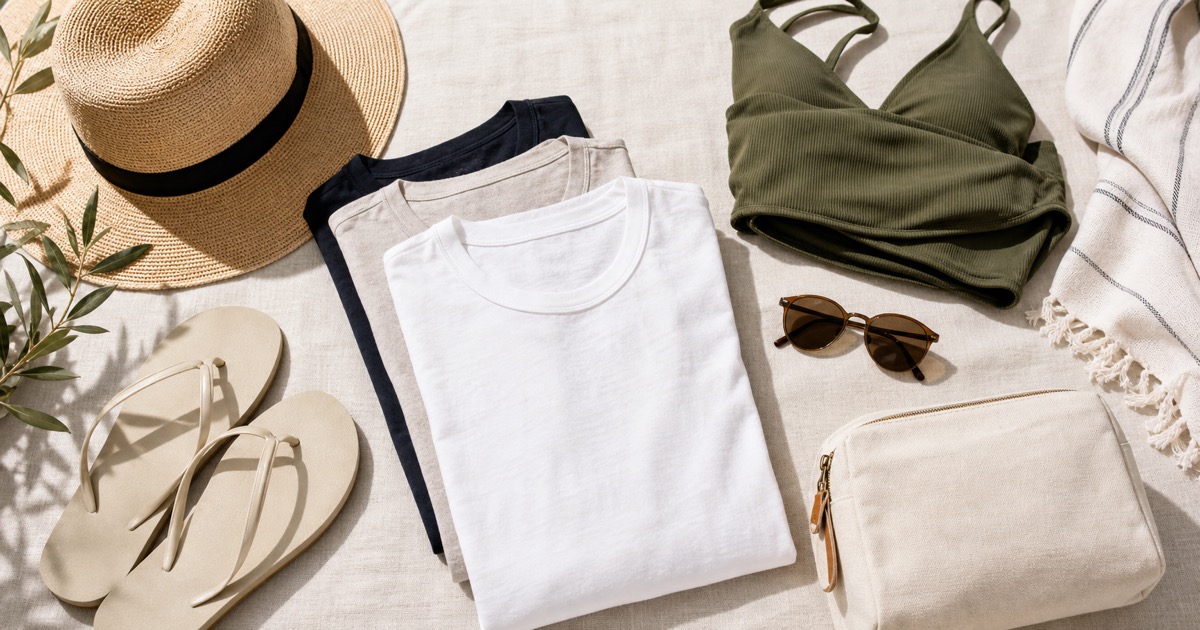
Warm-weather packing can look simple until the bag starts filling with almost-identical casual pieces. One extra tee feels harmless. A second pair of flip flops seems useful. A hat gets added because the weekend might include a boardwalk, patio, ferry, park, or pool. By the time the zipper closes, the bag is carrying several imagined versions of the same relaxed day.
A better warm-weather edit starts with roles rather than quantities. The reader needs something easy for wet or sandy moments, one swim option if water is truly part of the plan, a hat that works with the day's public moments, and tees that can be reworn or washed without turning the trip into a laundry puzzle. The point is not to own less for its own sake; it is to stop buying duplicates that do not solve a new problem.
This guide compares packability, outfit role, care needs, storage, and buying sequence. It does not promise sun protection, fit, durability, comfort, or travel performance. Readers should confirm current size charts, materials, care directions, seller details, delivery timing, and return terms on retailer pages before buying.
Quick Answer
Pack by moment: one easy footwear option for wet or casual stops, one swim piece only if the itinerary truly includes water, one hat that suits both the beach and the public part of the day, and two tees with different jobs. If a new item cannot name its moment, it is probably duplicating something already in the drawer.
The cleanest warm-weather bag usually has fewer categories than a summer display suggests. Flip flops, a bikini or other swimwear, a structured or packable hat, and a couple of tees can cover many relaxed plans when each piece matches the reader's actual route. The buying decision should focus on storage, care, and repeat wear rather than a fantasy of endless sunny outfits.
Shop the Edit
Elite Fashion may earn a commission from qualifying purchases made through shopping links on this page. Links are chosen for editorial fit and practical relevance to the article topic.
Start With the Actual Itinerary
Before comparing products, write the day in plain sequence: drive, ferry, hotel check-in, pool, boardwalk, dinner, cabin porch, city errands, or quick beach stop. That sequence reveals whether the bag needs swimwear, an easy sandal, a more presentable hat, or simply a better tee rotation. It also reveals which items are being packed out of habit.
A weekend with one pool hour does not need three swim options. A city day with a short waterfront walk may need a breathable tee and a hat more than a second pair of sandals. The itinerary keeps the edit practical because every piece is judged by where it will appear, how long it will be worn, and how easily it can be reset afterward.
Choose Easy Footwear With a Narrow Job
Flip Flops Men can be approached as a narrow footwear search path: compare strap feel, footbed shape, sole thickness, drying behavior, packing shape, and where the pair will be used. A flip flop that belongs at a pool, campground shower, or quick beach stop may not be the same pair the reader wants for a long errand day.
That distinction matters because casual footwear often multiplies. One pair lives by the door, one gets packed, one stays in the car, and none is clearly the best choice. Before buying another pair, decide whether it replaces a worn pair, solves a wet-surface moment, or simply repeats a role that is already covered.
Treat Swimwear as Itinerary-Specific
Bikini Women is a swimwear search path, not an automatic warm-weather purchase. Compare coverage preference, lining, closure, color, care directions, return rules, and whether the trip genuinely includes swimming or sun-adjacent lounging. If the weekend is mostly errands, patios, and walking, swimwear can stay out of the bag.
Swim pieces also need a reset plan. A wet bag, laundry timing, and a place to dry matter as much as the product listing. If a reader cannot name where the item will dry or how it will be repacked, the purchase may create more friction than it removes.
Use Hats to Bridge Beach and Public Moments
Hats Men and Hats Women help readers compare shape, brim size, crown structure, fold behavior, hair compatibility, color, and outfit range. The strongest warm-weather hat is often the one that can leave a beach tote, stop for lunch, and still look intentional with a tee and simple shorts or trousers.
Packability should be judged honestly. Some hats are meant to keep their shape and should travel in hand or on the head. Others fold more easily but may look less polished for a public stop. No hat should be treated as a promise of protection; readers should follow manufacturer information and choose broader weather planning when needed.
Make Tees Do Different Work
T Shirt Men and T Shirt Women are useful baseline routes because tees carry the largest repeat burden in a warm-weather bag. Compare fabric weight, neckline, sleeve length, opacity, color, laundry needs, and whether the tee works over swimwear, under a light layer, or with a dinner-adjacent outfit.
Two tees with different jobs beat four that all feel the same. One may be the travel tee worn in the car or on the ferry. Another may be the cleaner tee for lunch, markets, or a casual dinner. If a new tee cannot replace one of those roles, it may be an emotional backup rather than a practical addition.
Build a Small Packing Formula
For a one-night warm-weather trip, start with the outfit worn in transit, one backup tee, one easy footwear option, one hat, and swimwear only when the water plan is real. For two nights, add laundry-aware repetition rather than entire new categories. The reader can then adjust for weather, venue expectations, and personal comfort without turning the bag into a summer closet.
The formula also helps with shopping restraint. If the bag already has a sandal, swim option, hat, and two tees that match the real itinerary, the next purchase should solve a clear missing role. Otherwise, the better move may be to wash, repair, or remove older pieces before buying more.
A Buying Sequence for Warm-Weather Casual Pieces
First, list the actual moments in the weekend. Second, assign one clothing or accessory role to each moment. Third, compare size, material, care directions, pack shape, seller details, delivery timing, and return terms. Fourth, remove duplicates from the drawer before adding the new item. Fifth, after the trip, note what stayed unused.
That last note is the quiet secret of better warm-weather shopping. The unused piece tells the truth about imagined plans, and the repeated piece shows where a better version may be worth considering later.
Comparison Points
| Piece | What to compare |
|---|---|
| Flip flops | Compare strap feel, footbed shape, sole thickness, drying behavior, and whether the pair has one clear wet or casual-use role. |
| Swimwear | Check coverage preference, lining, closure, color, care directions, return terms, and whether water is truly on the itinerary. |
| Hat | Compare brim, crown, fold behavior, fabric care, outfit range, and how it moves from beach tote to public stop. |
| Tee | Use neckline, sleeve length, fabric weight, opacity, laundry rhythm, and outfit role to avoid duplicate buying. |
Use Cases
Beach stop plus lunch
Pack one easy sandal, one swim piece if needed, a hat that still works at lunch, and a cleaner tee for the public stop.
Cabin weekend
Favor pieces that can dry, be reworn, and return to the same small bag zone without needing a full summer wardrobe.
City heat errands
Skip swimwear unless water is real; use a breathable tee, simple hat, and footwear that suits the walking plan.
Before You Buy
Use retailer pages to confirm sizing, material, care instructions, pack count, color options, delivery timing, and return terms. The most useful purchase is the one that fits the real closet, not the one that creates a new problem to organize later.
Keep a short note after the first wear: what fit well, what needed tailoring or laundering, and what stayed unused. That small habit prevents duplicate purchases and makes the next shopping decision calmer.
Browse Category Hubs
Use these broader category hubs after the article-specific product options. Narrow by size, material, color, care needs, delivery options, and the storage space available at home.
FAQ
How many tees should I pack for a short warm-weather trip?
For many one- or two-night trips, two tees with different roles are more useful than several near-duplicates.
Should swimwear go in every summer bag?
No. Pack it when the itinerary genuinely includes water, changing space, and a reset plan for drying or laundry.
How do I avoid overbuying summer casual pieces?
Name the moment, compare care and packing behavior, then remove or replace duplicates before adding another piece.