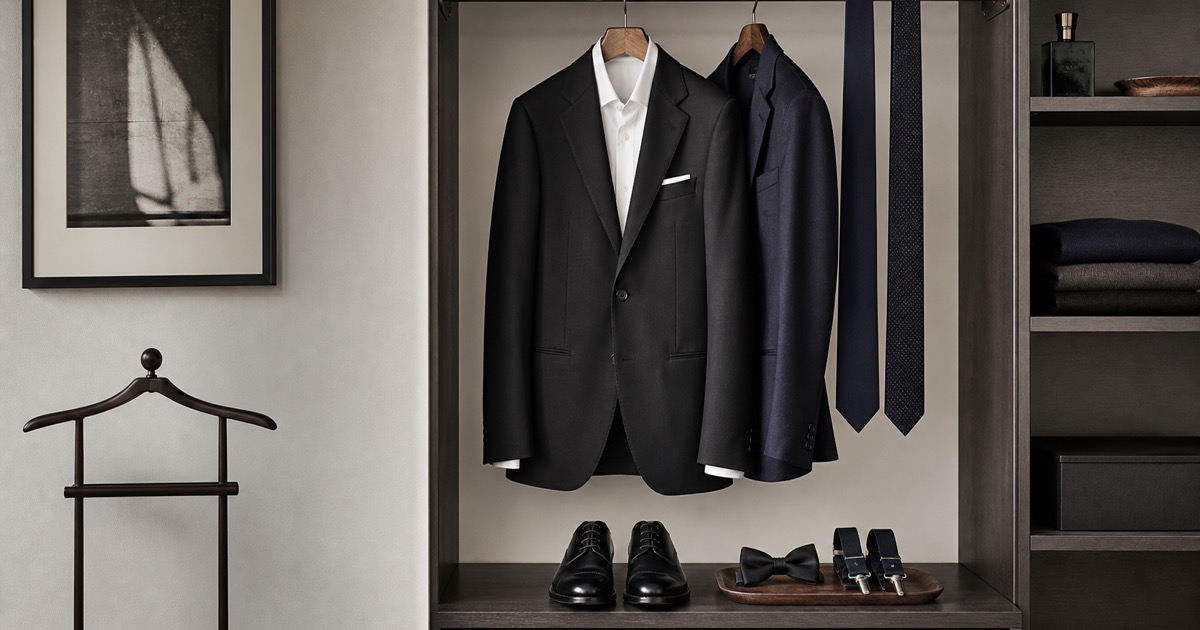
Occasional formalwear is tricky because the pressure arrives all at once. A wedding, gala, work dinner, graduation, memorial, or last-minute invitation can make a sparse closet feel unprepared. The temptation is to buy too much in one rush, then store pieces that do not speak to each other.
A stronger formal closet is intentionally small. It begins with one reliable suit direction, one shoe direction, and accessories that change tone without turning the wardrobe into an event costume archive. The goal is readiness, not a second closet.
This guide avoids promises about luxury value, perfect fit, investment dressing, or universal dress-code approval. Tailoring, body shape, climate, venue, and local expectations all matter. The purpose here is to compare categories and build a practical decision path before the next invitation lands.
Quick Answer
Start with the most likely invitation, not the most formal one. A dark business suit or clean slim suit, polished oxford shoes, one flexible tie, and one optional dressier accessory can cover many occasional events when each piece is chosen with tailoring and storage in mind.
Skip the crowded formal drawer. A bow tie or suspenders should enter only when they solve a specific dress-code, proportion, or comfort need. If the piece requires a rare event to make sense, it should earn its place through versatility or stay out of the closet.
Shop the Edit
Elite Fashion may earn a commission from qualifying purchases made through shopping links on this page. Links are chosen for editorial fit and practical relevance to the article topic.
Name the Event Frequency First
Before comparing suits, count the realistic calendar. Someone attending one wedding every two years needs a different closet than someone attending client dinners, family ceremonies, and holiday events in the same season. Frequency tells the reader how durable, alterable, and flexible the first suit should be.
A business suit search can be the safest starting point when the same piece may need to bridge professional dinners and formal family events. A slim fit suit can be useful when the reader prefers a cleaner line, but the fit should be judged while standing, sitting, reaching, and wearing the actual shirt and shoes.
Choose Shoes Before Extra Accessories
Oxford shoes often decide whether the formal outfit feels finished. They also decide whether the suit can be worn repeatedly without looking borrowed from another dress code. Compare toe shape, sole thickness, finish, and whether the shoe works with the suit color most likely to be worn.
Shoes need storage and break-in planning. A pair bought the night before an event can become the most memorable part of the evening for the wrong reason. Read product pages for size guidance, material, return terms, and care, then try the shoes with the trouser length before the event week.
Use Ties to Change Tone
A standard tie is usually more flexible than a bow tie because it can move between work dinners, ceremonies, and polished parties. Color, width, texture, and knot style can make one suit feel calmer or more dressed without requiring a second jacket.
A bow tie is not wrong; it is simply more specific. It works best when the invitation, venue, or personal style clearly supports it. If the reader is unsure, a clean tie often creates less risk and more repeat value.
Treat Suspenders as a Fit Tool
Suspenders can help formal trousers sit correctly, but they should be chosen as a practical support piece rather than an automatic style flourish. Compare attachment style, comfort while seated, and whether the waistband is designed to work with them.
If suspenders are added only because the closet feels incomplete, pause. The better first move may be tailoring, a better trouser rise, or a simpler belt decision. Small accessories become clutter when they are asked to create an occasion instead of supporting one.
Build One Formal Kit, Then Stop
A compact kit can live in one garment bag or one clear closet zone: suit, shirt, shoes, tie, optional bow tie, optional suspenders, lint brush, and care notes. Keeping the pieces together prevents the event-day search that makes readers buy duplicates.
After every event, record what actually worked. Did the shoes feel appropriate? Did the tie match the room? Did the suit need tailoring? That small review is more useful than buying another formal piece before the next invitation.
Comparison Points
| Piece | What to compare |
|---|---|
| Suit direction | Choose by event frequency, alteration needs, climate, and whether the suit can appear at more than one type of occasion. |
| Oxford shoes | Compare shape, sole, polish level, care, and how they look with the trouser break. |
| Tie | The most flexible tone changer for business dinners, ceremonies, and many formal gatherings. |
| Bow tie or suspenders | Best when the dress code, trouser fit, or personal style clearly gives them a job. |
Use Cases
One wedding this year
Prioritize a versatile suit, oxford shoes, and one tie before adding more specific accessories.
Work dinner or ceremony
Choose a suit route that can look polished without feeling like eveningwear in a professional room.
Festive formal invitation
A bow tie or suspenders can work when the event welcomes personality and the base suit is already settled.
Before You Buy
Use retailer pages to confirm sizing, material, care instructions, pack count, color options, delivery timing, and return terms. The most useful purchase is the one that fits the real closet, not the one that creates a new problem to organize later.
Keep a short note after the first wear: what fit well, what needed tailoring or laundering, and what stayed unused. That small habit prevents duplicate purchases and makes the next shopping decision calmer.
Browse Category Hubs
Use these broader category hubs after the article-specific product options. Narrow by size, material, color, care needs, delivery options, and the storage space available at home.
FAQ
What formal pieces should a minimal closet include?
One reliable suit route, polished dress shoes, one flexible tie, and only the accessories that match real invitations.
Is a bow tie more formal than a tie?
It can feel more specific or festive, but appropriateness depends on the invitation, venue, and outfit context.
Should I buy a new suit for every event?
Usually no. A well-chosen suit with small accessory changes can cover many occasional events when fit and condition are maintained.