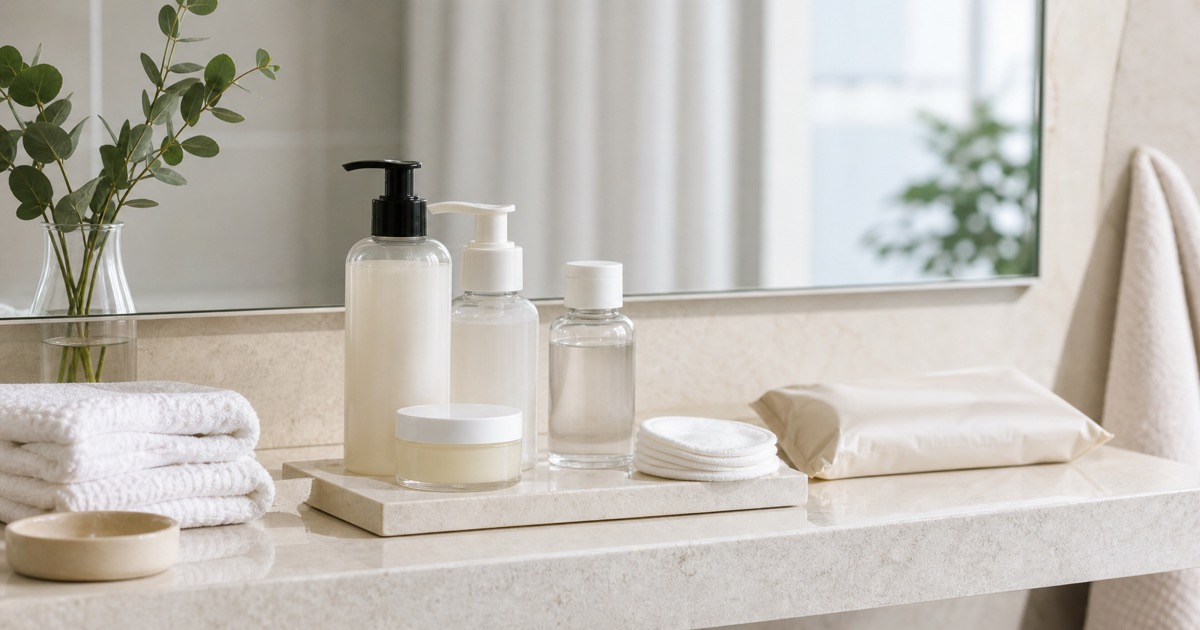
A gentle cleanser shelf is often less about finding one heroic bottle and more about deciding what the bathroom can repeat every night. The same sink may need to handle face washing, makeup removal, tooth brushing, towel storage, guests, and another person's routine. When every product sits in the front row, the shelf starts asking for attention before the day is even over.
The useful edit begins by separating jobs. One cleanser may live by the sink because it is used daily. Another format may belong in the shower. Wipes or cotton rounds may be helpful only when they are stored in a way that keeps the counter calm. A travel bottle can be smart if it prevents last-minute packing, but it is clutter if it never leaves the drawer.
This guide compares practical details: pump height, cap security, shelf depth, pouch closure, shared access, cleanup, and buying discipline. It does not diagnose skin needs, promise skin results, or replace professional advice. Readers should use retailer pages to confirm ingredients, size, seller details, return terms, and current availability before buying.
Quick Answer
Build the shelf around one main cleanser, one removal support if makeup or sunscreen removal is part of the routine, and one travel or backup format only when it has a real storage home. The best choice is the one that can be reached, used, closed, and returned without leaving the bathroom looking unfinished.
For shared bathrooms, start with container behavior before comparing product names. A pump may be easy to reach but too tall for a mirror cabinet. A smaller bottle may fit a shower caddy but vanish behind towels. A wipe pouch may help occasional late nights, but only if it closes neatly and does not become a permanent counter pile.
Shop the Edit
Elite Fashion may earn a commission from qualifying purchases made through shopping links on this page. Links are chosen for editorial fit and practical relevance to the article topic.
Start With the Main Location
A cleanser used at the sink should be chosen like a small piece of furniture. It needs enough height clearance, a stable base, and a spot that does not block the soap, toothbrush cup, or towel. If two people use the same sink, a pump or squeeze bottle also has to be understandable without a conversation.
A shower cleanser lives differently. It has to fit a ledge or caddy, tolerate being moved with wet hands, and close securely enough to avoid slow leaks. Before adding another bottle, map the real route from mirror to shower to towel. The cleanser that matches that route will be easier to repeat than the one that merely looks tidy in a product photo.
Separate Cleansing From Removal
Makeup removal, sunscreen removal, and ordinary face washing can be adjacent without being the same job. A reader who wears makeup most days may need cotton rounds, a wipe pouch, or a separate removal step close to the mirror. A reader who rarely wears makeup may be better served by keeping removal supplies in a drawer instead of building the whole shelf around them.
This distinction matters because removal items often spread. Cotton rounds need a small stack, wipes need a closure, and travel formats need somewhere to go after a trip. If the shelf has no reset plan, the support item becomes the messiest part of the routine.
Compare the Five Product Paths
The CeraVe, Cetaphil, La Roche-Posay, and Cosrx search paths are useful starting points because they let readers compare bottle format, size, seller details, and whether a product belongs in a daily sink or shower routine. The comparison should stay practical: how the container closes, where it sits, how often it is replaced, and whether it suits the reader's existing rhythm.
Micellar cleansing wipes belong in the decision only when the format has a defined role. They may be a travel backup, a gym-bag item, or an occasional late-night support. They should not automatically replace a full shelf plan, and readers should check package count, seller information, disposal guidance, and ingredient details before deciding.
Make Shared Storage Less Awkward
A shared shelf benefits from fewer front-row items. Put the highest-frequency cleanser in the most visible spot, keep removal supplies in a tray or drawer, and move backup bottles behind the daily item. This is especially helpful in rentals, guest bathrooms, and small apartments where the counter also has to look presentable after a rushed morning.
If roommates or partners prefer different formats, avoid turning the sink into a product lineup. Give each person a narrow zone, or choose one shared support item and keep personal items in a cabinet. The aim is not strict minimalism; it is a shelf that can survive ordinary use.
Travel and Gym-Bag Decisions
Travel bottles and wipe pouches are helpful only when they reduce friction. A travel backup should live near the toiletries pouch, not permanently on the sink. A wipe pouch for a gym bag should close securely and be checked before it dries out, leaks, or becomes an item that is carried but rarely used.
Before buying, decide whether the product is for the bathroom, the overnight bag, the locker-room pouch, or a guest drawer. One product can serve more than one place, but only if its container and storage behavior make that realistic.
A Buying Sequence That Keeps the Shelf Calm
First, choose the location: sink, shower, drawer, travel pouch, or guest shelf. Second, choose the container format that fits that location. Third, check retailer pages for ingredients, seller details, size, package count, return terms, and delivery timing. Fourth, remove one older or duplicated item before adding the new one to the front row.
That final removal step is easy to skip, but it is what keeps the shelf from becoming a rolling archive. A good cleanser shelf should make the evening routine easier to finish and the morning bathroom easier to reset.
Comparison Points
| Format | What to compare |
|---|---|
| Pump bottle | Best for a visible sink or shower spot with enough height and a stable return path. |
| Smaller bottle | Useful when cabinet depth, travel packing, or shower caddy space matters more than front-row presence. |
| Wipe pouch | Compare closure, count, portability, disposal guidance, and whether the format has a real use case. |
| Cotton round stack | Works best in a contained tray or drawer rather than loose beside the sink. |
Use Cases
Shared apartment bathroom
Keep one daily cleanser visible and put removal supplies in a tray or drawer so both routines can reset.
Gym or overnight bag
Choose a secure smaller format and check seller details, closure, and pack count before adding it to the pouch.
Guest-ready shelf
Use familiar, tidy formats and leave personal treatment products out of the visible guest area.
Before You Buy
Use retailer pages to confirm size, package count, seller information, ingredient details, care or disposal guidance, delivery timing, and return terms. This article compares shopping fit and storage behavior; it is not personal skin, hair, or medical advice.
When the new item arrives, remove one duplicate, empty, or rarely used product from the same shelf. That small reset keeps the purchase from becoming another item to organize.
Browse Category Hubs
Use these broader category hubs after the article-specific product options. Narrow by size, seller details, ingredient preferences, delivery options, and the amount of bathroom or bag space available.
FAQ
How many cleanser products should stay visible?
One main cleanser and one clearly used removal support item are enough for many small bathrooms.
Are cleansing wipes a daily replacement?
Treat wipes as a format decision, not a universal replacement. Compare use occasion, closure, ingredients, and disposal guidance.
What should I check before buying?
Confirm size, ingredient details, seller information, package count, return terms, and whether the container fits the real shelf.